Project Overview
Building on the foundational 2023 cooling system design, I led the optimization and enhancement of our thermal management system for the UT24 FSAE vehicle. This year marked a significant advancement in our thermal engineering capabilities, incorporating CFD analysis, experimental validation, and data-driven optimization to improve cooling efficiency by 10%.
Previous Work: This optimization builds on the 2023 cooling system foundation with advanced thermal modeling and performance data.
Integrated Project Approach
The 2024 cooling system design represented a culmination of multiple research projects, creating a comprehensive thermal management solution through integrated experimental and simulation work:
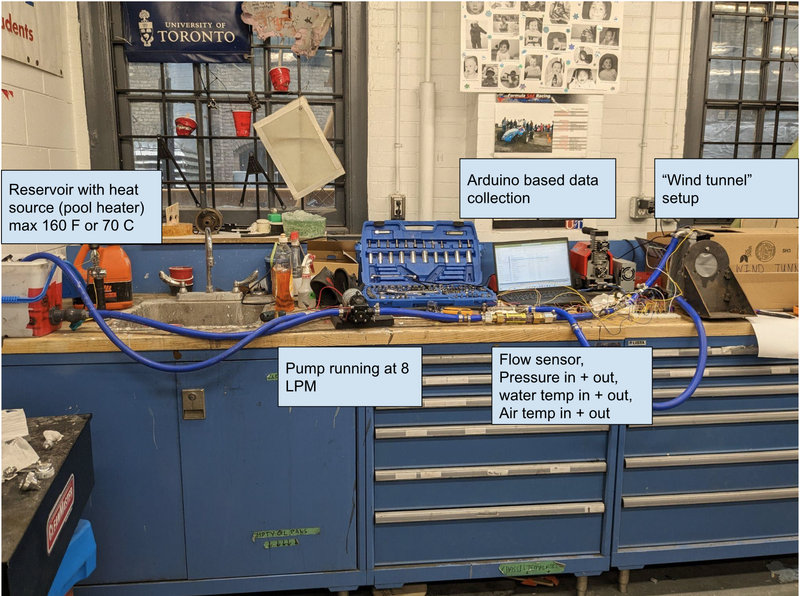
Radiator Performance Foundation: Leveraged experimental data from the radiator characterization project to understand real-world thermal performance characteristics, including pressure drops, heat transfer coefficients, and flow rate dependencies.
CFD Validation: Used detailed CFD analysis from the radiator CFD simulation project to validate experimental results and optimize radiator design parameters beyond what experimental testing alone could achieve.
Accurate Heat Load Generation: Integrated the comprehensive MATLAB Simulink framework to generate precise heat loads for motor and inverter components during endurance runs, accounting for vehicle dynamics, electrical losses, and transient thermal behavior.
Final Cooling System Simulation
Combining experimental radiator data, CFD-validated performance curves, and Simulink-generated heat loads enabled the first comprehensive cooling system simulation for FSAE electric vehicles. The results showed excellent correlation between predicted and actual temperatures during endurance testing.

2024 cooling system render showing optimized routing and component placement
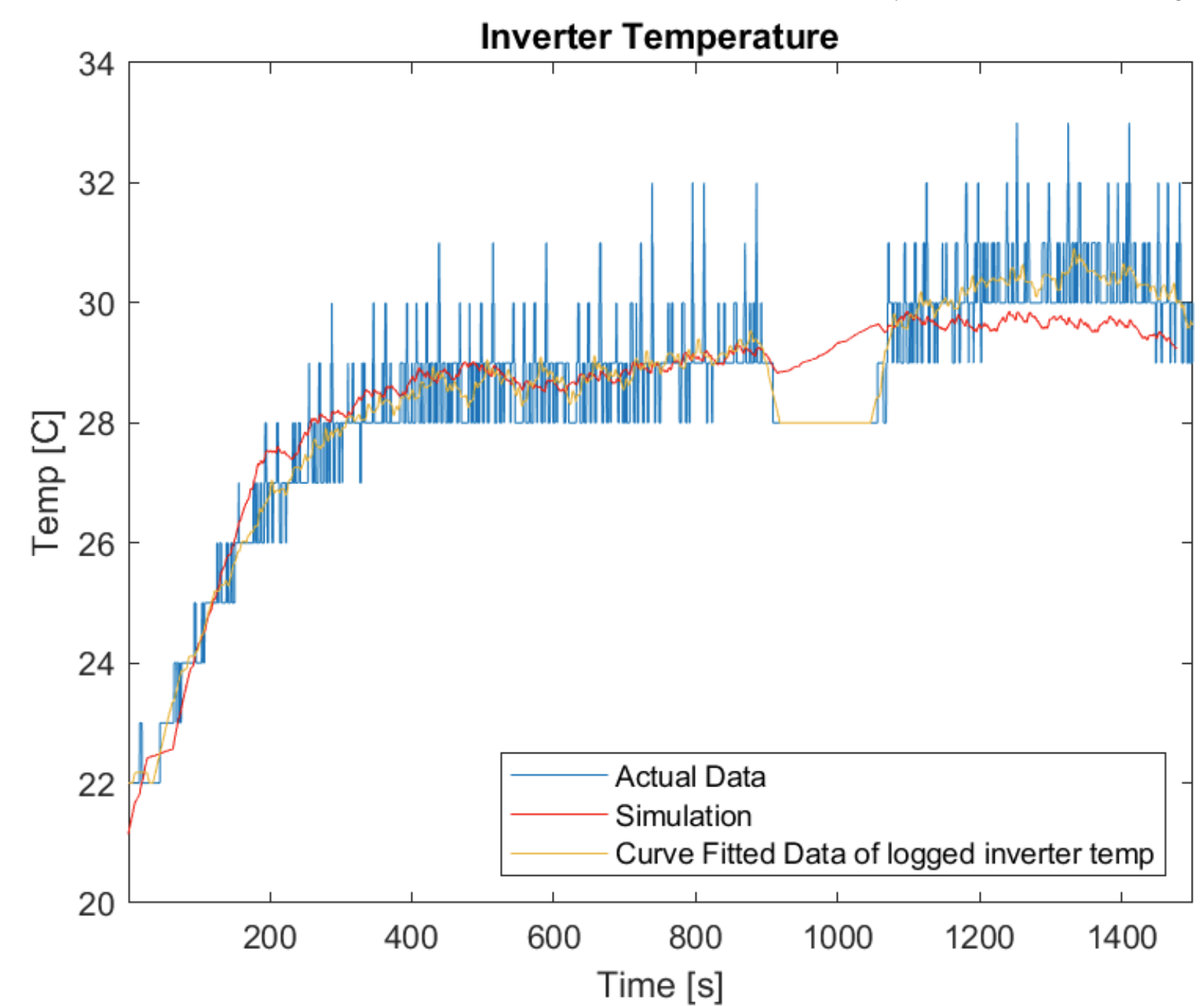
Inverter temperature prediction during endurance run - simulation results showing accurate thermal modeling

Motor temperature prediction during endurance run - excellent correlation between simulation and experimental data
As shown in the plots above, both motor and inverter temperatures matched experimental measurements very well during an endurance run, validating the integrated approach of combining experimental characterization, CFD analysis, and multi-physics simulation.
Thermal System Optimization
The 2024 cooling system optimization focused on three key areas:
- CFD Analysis: Computational fluid dynamics simulation of radiator and motor cooling performance
- Experimental Validation: Real-world testing and correlation with simulation results
- Component Optimization: Data-driven improvements to heat exchangers and cooling circuits
CFD Analysis & Simulation
I implemented comprehensive CFD analysis to optimize thermal performance:
Radiator CFD
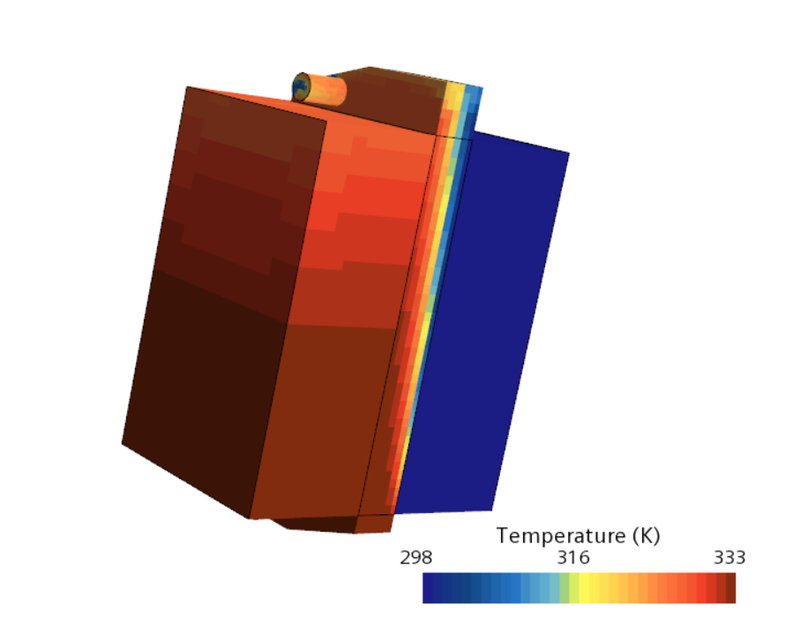
Simulated airflow patterns and heat transfer characteristics
System Integration
Integration of isolated radiator CFD analysis with experimental characterization data for comprehensive thermal system modeling
Experimental Validation
All CFD results were validated through comprehensive experimental testing:
- Temperature mapping across motor and inverter components during dyno testing
- Pressure drop measurements and flow rate optimization
- Heat rejection capacity testing under various operating conditions
- Correlation between simulation predictions and real-world performance
Component Improvements
After the first year of cooling system experience, we significantly improved routing and component placement to optimize thermal performance and packaging efficiency. The 2024 design featured:
- Optimized Hose Routing: Redesigned coolant lines to minimize pressure drops and improve flow distribution
- Strategic Component Placement: Repositioned radiators, pumps, and heat exchangers for better airflow and reduced parasitic losses
- Enhanced Packaging: Integrated cooling components more efficiently within the vehicle envelope
- Improved Accessibility: Better placement for maintenance and troubleshooting during competition
Based on CFD analysis and experimental data, several additional key improvements were implemented:
Impact & Results
The 2024 cooling system optimization delivered measurable performance gains:
- 10% improvement in cooling system efficiency
- Reduced motor operating temperatures by 5°C under peak load
- Enhanced reliability during endurance events
- Established CFD-based design methodology for future thermal systems
- Created comprehensive thermal testing protocols
Future Development: This thermal optimization work contributes to the integrated MATLAB Simulink framework with comprehensive multi-physics modeling.
Related FSAE Projects

2023 Cooling System Design
2023Initial cooling system architecture and component selection.
Impact: Designed complete cooling loop for a first year electric FSAE vehicle, ensuring adequate thermal management for motor and battery systems under competition conditions
Radiator Characterization & Testing
2024Designed and built UTFR's first comprehensive radiator characterization test bench with custom circuit board for data acquisition, featuring 1 flow rate sensor, 2 pressure sensors, 2 water temperature sensors, 2 air temperature sensors, and hot wire anemometer - all logged directly to computer. This marked the first experimental radiator testing in team history and generated valuable thermal performance data.
Impact: Established experimental thermal testing capabilities and generated comprehensive radiator performance database for CFD validation and cooling system design
CFD Radiator Simulation
2024Developed STAR-CCM+ expertise for thermal analysis by creating a comprehensive radiator model using porous media approach, establishing foundation for advanced CFD thermal simulations in electric vehicle cooling systems.
Impact: Established STAR-CCM+ thermal analysis capabilities and created validated radiator model for cooling system optimization