Portfolio Timeline
My journey in Formula SAE competition, showcasing the evolution from basic CAD design to advanced simulation and testing. Each project demonstrates engineering skills in thermal management, vehicle dynamics, structural analysis, and embedded systems.
FSAE Competition History
A chronological overview of my involvement with the University of Toronto Formula Racing team, from UT22 to UT26, highlighting the evolution of vehicle performance, technical innovation, and leadership roles.

UT26 — 2026 Competition Car
2026Currently serving as Drivetrain Lead, leading a full drivetrain redesign from a rear-wheel-drive system to an all-wheel-drive architecture using in-wheel hub motors.
Performance: Competition pending
Impact: Ongoing — competition results pending.

UT25 — 2025 Competition Car
2025Acted as an advisor while completing my co-op placement. Supported simulation development and conducted drivetrain research to enable the next-generation AWD platform.
Performance: 15th Overall at FSAE Michigan, 2nd Overall at Formula Hybrid + Electric New Hampshire.
Impact: Enhanced simulation capabilities and design groundwork for UT26.
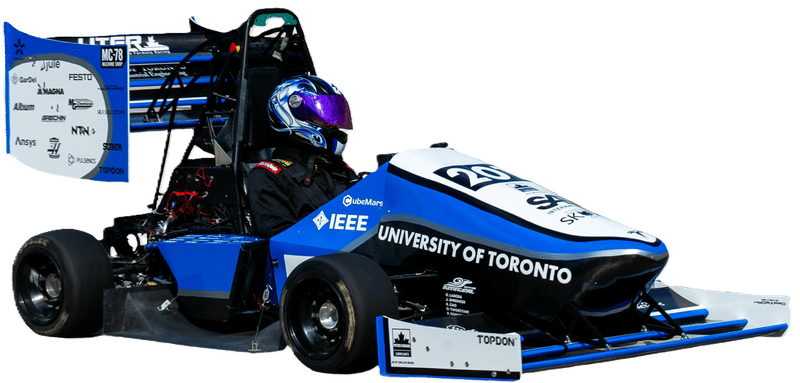
UT24 — 2024 Competition Car
2024Second year as Drivetrain Lead, focusing on refinement and optimization of the previous year's electric platform, including improvements in cooling, efficiency, and reliability.
Performance: 1st Overall at Formula Hybrid + Electric New Hampshire, 9th Overall at FSAE Michigan, and first driverless-capable vehicle in team history.
Impact: Achieved top-tier performance and reached design finals at both Michigan and New Hampshire competitions.
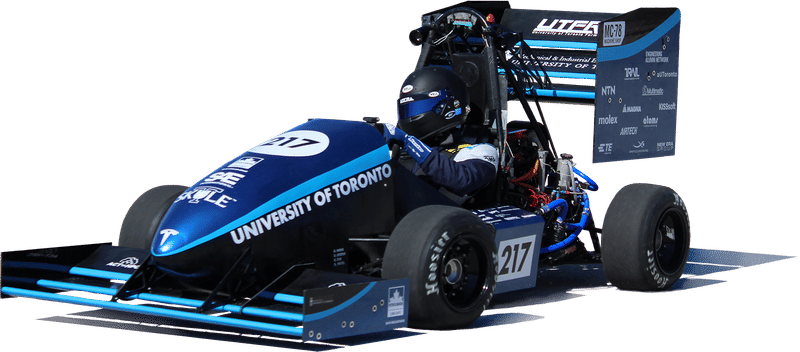
UT23 — 2023 Competition Car
2023Led the development of UTFR's first fully electric FSAE vehicle as Drivetrain Lead, establishing the foundation for future EV platforms.
Performance: 1st Overall at Formula Hybrid + Electric New Hampshire, 5th Overall at FSAE Michigan, 6th Overall at Formula Student Czech Republic.
Impact: Successfully delivered the team's first operational EV powertrain — reliable, competitive, and groundbreaking for the program.
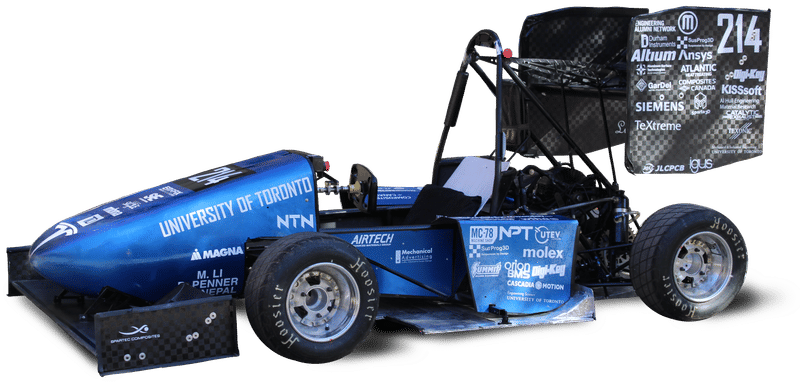
UT22 — 2022 Competition Car
2022Joined the team as a Drivetrain Member, gaining foundational experience in vehicle systems and contributing to the initial transition toward an electric powertrain architecture.
Performance: 21st Overall at FSAE Michigan — steel tube chassis with double unequal-length wishbone suspension.
Impact: Developed a strong understanding of FSAE systems integration and collaboration within a multidisciplinary engineering team.
Simulation & Dynamics
Advanced simulation frameworks for vehicle performance analysis, from basic lap time optimization to integrated multi-physics modeling.

OptimumLap Lap Simulation & Drive Ratio Optimization
2023As drivetrain lead for the UT23 electric FSAE vehicle, advanced the team's simulation capabilities by pioneering comprehensive track mapping and points-based analysis for drive ratio optimization. While not the first to use OptimumLap, established systematic validation of tire models through autocross and endurance testing correlation.
Impact: Optimized drive ratios for electric FSAE vehicle across 4 international competitions, improving acceleration and top speed performance through validated simulation models

MATLAB Lap Simulation Development
2024Led the transition from commercial OptimumLap software to custom MATLAB lapsim framework, collaborating with suspension team to implement TTC tire models and establishing foundation for advanced vehicle dynamics simulation.
Impact: Established foundation for advanced simulation with 5% accuracy improvement through TTC tire model integration and custom MATLAB framework development
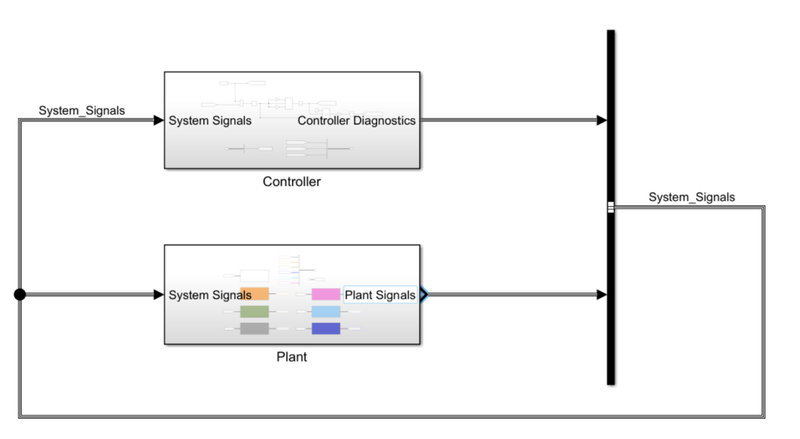
Integrated MATLAB Simulink Lap Simulation
2025Led development of integrated MATLAB Simulink framework advancing from steady-state to transient simulations, collaborating with powertrain and vehicle dynamics teams to integrate existing models and implement comprehensive multi-physics modeling with Vi-grade and Adams integration.
Impact: Established transient simulation capabilities enabling real-time analysis of complex vehicle dynamics, electrical systems, and thermal management interactions
Thermal Management Systems
Comprehensive thermal engineering from component design to experimental validation and CFD optimization.

2023 Cooling System Design
2023Initial cooling system architecture and component selection.
Impact: Designed complete cooling loop for a first year electric FSAE vehicle, ensuring adequate thermal management for motor and battery systems under competition conditions
Radiator Characterization & Testing
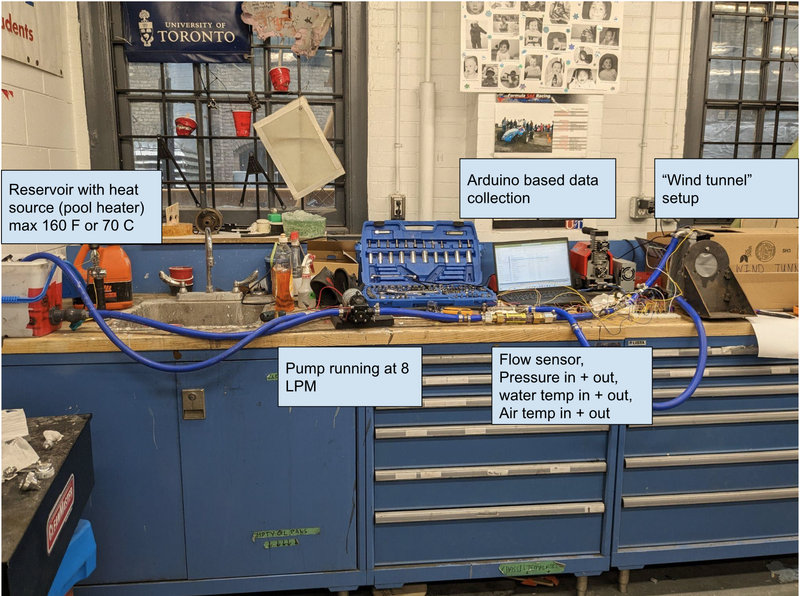
2024Designed and built UTFR's first comprehensive radiator characterization test bench with custom circuit board for data acquisition, featuring 1 flow rate sensor, 2 pressure sensors, 2 water temperature sensors, 2 air temperature sensors, and hot wire anemometer - all logged directly to computer. This marked the first experimental radiator testing in team history and generated valuable thermal performance data.
Impact: Established experimental thermal testing capabilities and generated comprehensive radiator performance database for CFD validation and cooling system design

2024 Cooling System Design & Thermal Optimization
2024Advanced thermal management optimization using CFD analysis and experimental validation, building on the 2023 foundation with significantly improved routing and component placement to achieve 10% cooling efficiency improvement and 5°C temperature reduction.
Impact: Achieved 10% cooling efficiency improvement and 5°C motor temperature reduction through CFD-driven design optimization
CFD Radiator Simulation
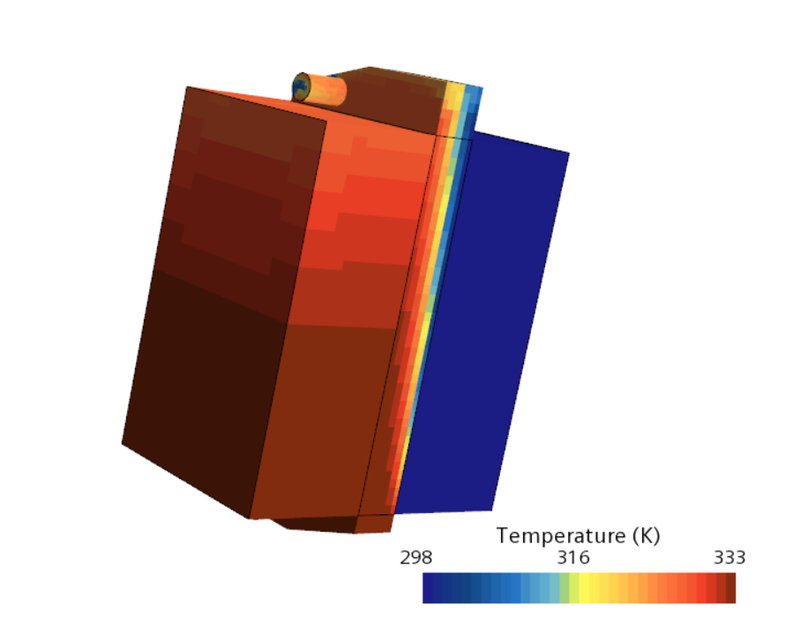
2024Developed STAR-CCM+ expertise for thermal analysis by creating a comprehensive radiator model using porous media approach, establishing foundation for advanced CFD thermal simulations in electric vehicle cooling systems.
Impact: Established STAR-CCM+ thermal analysis capabilities and created validated radiator model for cooling system optimization
Star-CCM+ Motor Cooling Jacket CFD Analysis
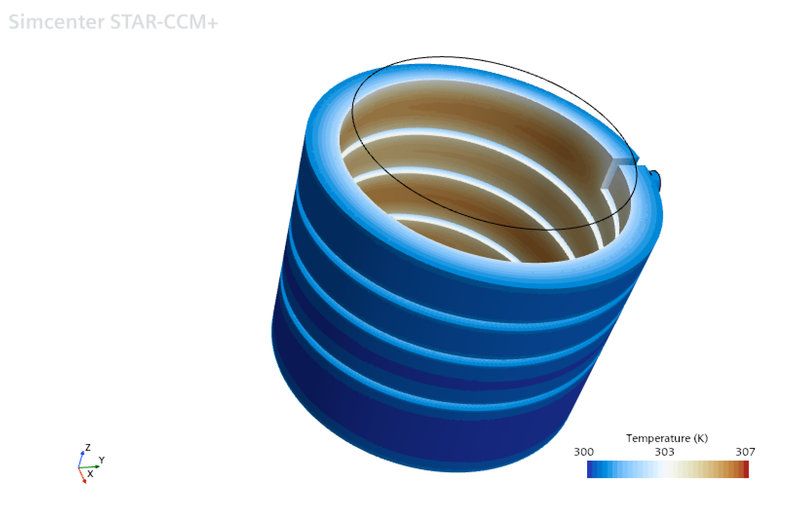
2026Developed optimized cooling jacket designs for compact outboard motors in UT26 AWD system using Star-CCM+ CFD simulations. Analyzed coolant flow distribution, heat transfer efficiency, and pressure drop to ensure adequate thermal management within severe packaging constraints. Iteratively refined internal channel geometry to maximize cooling performance while minimizing pumping power requirements for the four-wheel-drive configuration.
Impact: Optimized cooling jacket design ensures reliable thermal performance of compact AWD motors under high-power competition conditions, preventing thermal throttling while maintaining minimal package size
Data Acquisition & Controls
Developing embedded systems and data acquisition platforms for vehicle monitoring and analysis.
Drivetrain Datalogger
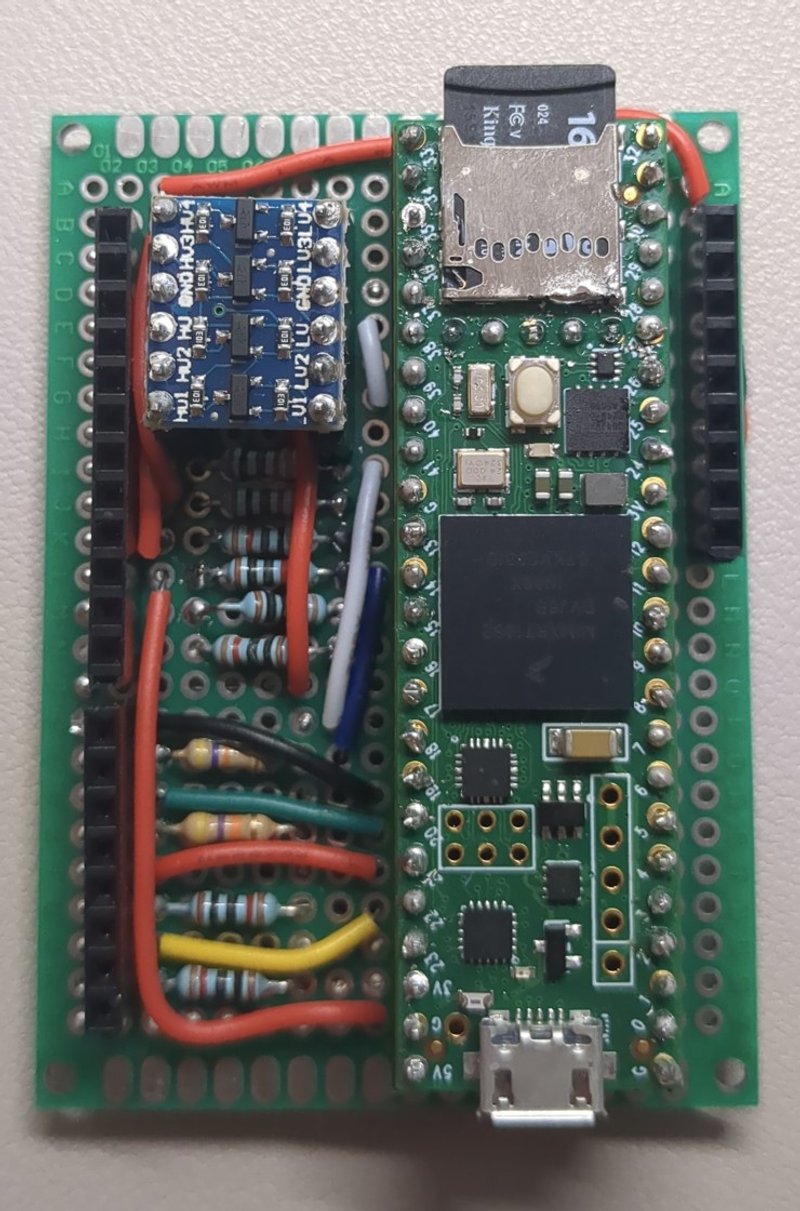
2025Developed a custom drivetrain datalogger system to log cooling and strain gauge data during testing days on the 2024 car for 2025 development. Programmed a Teensy microcontroller and wired up all the circuitry myself, learning to crimp Molex wires and harness wires throughout the car to gather data on an onboard SD card. This data was then correlated with simulations for improved force and load analysis.
Impact: Established comprehensive data acquisition capabilities enabling correlation between experimental data and simulations for enhanced force and load analysis in vehicle development
Mechanical Design & CAD
Foundation of vehicle development through CAD modeling, component design, and manufacturing processes.

Radiator CAD
2022First SolidWorks project - created a basic CAD model of the radiator for the UT22 FSAE vehicle despite having no prior CAD experience.
Impact: First CAD project that built foundational SolidWorks skills and demonstrated ability to learn new software quickly
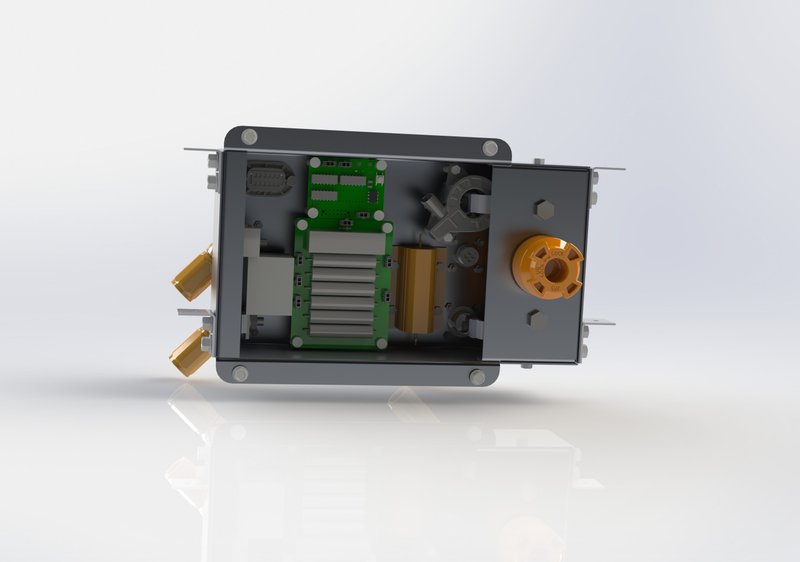
HV Box
2022Designed and manufactured the waterproof high voltage electrical enclosure for the team's first electric FSAE vehicle, focusing on manufacturable sheet metal design and precision assembly techniques.
Impact: Developed manufacturable enclosure design

Sprocket Design & FEA Analysis
2023Designed a custom sprocket for the UT23 electric FSAE vehicle, performing comprehensive load analysis and ANSYS FEA simulation to ensure structural integrity under competition loads.
Impact: Created optimized sprocket design with 15% weight reduction and factor of safety > 2.5, supporting drive ratio optimization work

Drivetrain Harmonic Analysis
2024Comprehensive harmonic analysis of driveshafts and sprockets to prevent resonance failures. Performed hand calculations of critical speeds, ANSYS modal analysis, and fatigue evaluation, revealing driveshafts require 1,192,700 cycles at equivalent distance of 1,648 km to fail at natural frequency, which would require unrealistic vehicle speeds of 1,079 km/h.
Impact: Ensured drivetrain reliability by preventing resonance failures and validated exceptional component durability for FSAE competition conditions

Strain Gauge Testing & Load Analysis
2025Installed strain gauges on tie rods and motor mounts to capture accurate load data for design optimization. Performed manual calibration by setting up circuitry and applying known loads using heavy objects, then designed the drivetrain datalogger system to log these loads during testing days.
Impact: Enabled data-driven optimization of structural components and established foundation for real-time load monitoring during competition

Automated Planetary Gearbox Design Tool
2026Developed comprehensive MATLAB simulation tool that automatically sweeps through hundreds of gear ratio combinations for compound planetary gearbox stages. The tool calculates stresses for each configuration, identifies hunting ratios to prevent premature wear, and optimizes for minimum diameter based on predefined drive ratios. Supports multiple modules across different compound stages, enabling rapid optimization of complex multi-stage gearbox designs.
Impact: Dramatically accelerated gearbox design iteration by automating stress calculations and ratio optimization across hundreds of configurations, ensuring optimal hunting ratios and minimal package size for AWD drivetrain

KISSsoft Detailed Gear Design & Fatigue Analysis
2026Advanced gear design analysis using KISSsoft to refine planetary gearbox designs with detailed lubrication specifications, oil viscosity selection, and comprehensive fatigue analysis. Integrated load spectrum data and gear tooth parameters from MATLAB optimization results to perform industry-standard fatigue life calculations and validate final gearbox design for UT26 AWD drivetrain.
Impact: Validated gearbox design with professional-grade analysis tools, ensuring adequate fatigue life under competition load spectra and optimal lubrication for thermal management and efficiency