Project Overview
After a year of using OptimumLap, I recognized the limitations of off-the-shelf simulation software as UTFR began developing more sophisticated vehicle models. As the team transitioned to implementing correlated tire models from the TTC (Formula SAE Tire Test Consortium), I helped lead the development of a custom MATLAB-based lap simulation framework. This open-source approach allowed us to create highly customized models that accurately represented our electric FSAE vehicle's complex dynamics.
Previous Work: This project builds upon the OptimumLap simulation work from the previous year, addressing its limitations through custom development.
🚀 Further Development: Integrated Simulink Framework
This MATLAB foundation became the basis for our most advanced simulation platform. In 2025, we evolved this work into a comprehensive MATLAB Simulink framework that incorporates transient simulations, multi-physics coupling, and real-time analysis capabilities. The steady-state MATLAB lapsim provided here established the core methodologies that enabled this next-level development.
Transition from Commercial Software
The limitations of OptimumLap became apparent as our modeling requirements grew more complex:
- Limited customization options for advanced tire models
- Proprietary algorithms that couldn't be modified or validated
- Difficulty integrating FSAE-specific electric vehicle characteristics
- Lack of transparency in simulation assumptions and calculations
MATLAB Framework Development
I spearheaded the transition to an open-source MATLAB lapsim, implementing significant improvements:
Advanced Tire Modeling
Replaced simple friction coefficients with normal load-based lookup tables, enabling accurate simulation of tire behavior across different loading conditions
TTC Tire Data Integration
Collaborated with the suspension team to integrate correlated tire models from the Formula SAE Tire Test Consortium, providing industry-standard tire performance data
Vehicle Dynamics Framework
Established the foundation for advanced vehicle modeling, with electric powertrain characteristics to be implemented in future iterations
Technical Implementation
The MATLAB framework required extensive development across multiple engineering domains:
Simulation Results & Validation
The custom MATLAB lapsim provided significantly improved accuracy and insight:

Vehicle dynamics matching for Michigan autocross, demonstrating correlation between simulation and real-world performance
Impact & Advancements
The transition to custom MATLAB simulation marked a significant advancement in our engineering capabilities:
- Improved simulation accuracy by 5% through better tire modeling
- Enabled optimization of electric vehicle-specific parameters
- Provided full transparency and customization of simulation algorithms
- Created collaborative framework for cross-team simulation development
🚀 Further Development: Integrated Simulink Framework
This MATLAB foundation became the basis for our most advanced simulation platform. In 2025, we evolved this work into a comprehensive MATLAB Simulink framework that incorporates transient simulations, multi-physics coupling, and real-time analysis capabilities. The steady-state MATLAB lapsim provided here established the core methodologies that enabled this next-level development.
Previous Work: This project builds upon the OptimumLap simulation work from the previous year, addressing its limitations through custom development.
Related FSAE Projects

OptimumLap Lap Simulation & Drive Ratio Optimization
2023As drivetrain lead for the UT23 electric FSAE vehicle, advanced the team's simulation capabilities by pioneering comprehensive track mapping and points-based analysis for drive ratio optimization. While not the first to use OptimumLap, established systematic validation of tire models through autocross and endurance testing correlation.
Impact: Optimized drive ratios for electric FSAE vehicle across 4 international competitions, improving acceleration and top speed performance through validated simulation models
Integrated MATLAB Simulink Lap Simulation
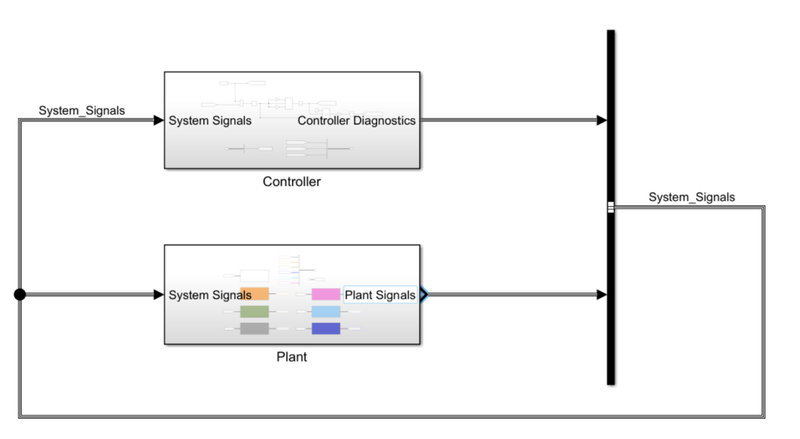
2025Led development of integrated MATLAB Simulink framework advancing from steady-state to transient simulations, collaborating with powertrain and vehicle dynamics teams to integrate existing models and implement comprehensive multi-physics modeling with Vi-grade and Adams integration.
Impact: Established transient simulation capabilities enabling real-time analysis of complex vehicle dynamics, electrical systems, and thermal management interactions

2024 Cooling System Design & Thermal Optimization
2024Advanced thermal management optimization using CFD analysis and experimental validation, building on the 2023 foundation with significantly improved routing and component placement to achieve 10% cooling efficiency improvement and 5°C temperature reduction.
Impact: Achieved 10% cooling efficiency improvement and 5°C motor temperature reduction through CFD-driven design optimization